
Can You Have Lyme Disease with a Negative Blood Test: Why False Negatives Happen & What to Do Next

Key Takeaways
A negative Lyme blood test doesn't rule out infection, since standard tests detect antibodies your body may not have produced yet.
Standard two-tier testing has been reported at just 30% to 40% sensitivity in early Lyme, and early antibiotics or individual immune differences can all push results negative.
Symptoms can point to Lyme even when tests are negative, including migrating joint pain, heavy fatigue, flu-like aches, and later neurological signs like facial palsy.
If you still suspect Lyme, track your symptoms in detail, request a clinical evaluation, and see a provider experienced in tick-borne illness.
Alongside your medical care, Healthflow Naturopathic offers functional testing and individualized, root-cause support to help make sense of lingering, hard-to-explain symptoms and support your overall wellbeing.
Can You Have Lyme Disease with a Negative Blood Test?
A negative Lyme disease blood test does not mean you are in the clear, especially if your symptoms started recently or you've had a known tick exposure.
The standard tests used in most clinics are designed to detect antibodies your immune system produces in response to Borrelia burgdorferi, the bacteria behind Lyme disease. However, your body takes time to build those antibodies, and during that window, standard testing will miss the infection entirely.
This gap between infection and detectable immune response is called the seronegative window, and it's one of the most clinically significant limitations of current Lyme testing. Studies have reported that standard two-tier testing has a sensitivity of only 30% to 40% in early Lyme disease before a full antibody response develops.
Healthflow Naturopathic: Root-Cause Care for Lasting Wellness 15+ Years of Practice | 4.6★ Google Rating | Calgary, AB & Virtually Alberta-Wide  Heal Beyond the Symptoms: Discover personalized naturopathic care that looks deeper into digestive issues, autoimmune concerns, and mental wellness. Healthflow Naturopathic combines functional testing, clinical nutrition, and evidence-informed natural therapies to build individualized plans focused on long-term health and prevention. Care Designed Around You: ✓ Support for IBS, SIBO, bloating, and food sensitivities ✓ Autoimmune and chronic inflammation guidance ✓ Stress, fatigue, and mental wellness support ✓ Functional testing and tailored nutrition plans ✓ In-person and virtual visits, with direct billing available Your health story is unique. Your care should be too. |
What Causes False Negatives for Lyme Disease?
The core issue is that current Lyme blood tests don't look for the bacteria directly. Instead, they look for your body's reaction to it. This antibody-based approach creates a built-in delay.
When Borrelia burgdorferi is first introduced into your skin at the site of a tick bite, your immune system doesn't immediately flood your body with measurable antibodies. That process takes days to weeks, and until those levels reach a detectable threshold, the standard ELISA test will return a negative result even in the presence of active infection.
Some people can also produce antibodies that cross-react on Lyme tests, generating false positives. This has led labs and clinicians to calibrate tests conservatively, which helps reduce false positives but further increases the rate of false negatives in early-stage patients.
Beyond timing, additional factors reduce test accuracy, including:
Early antibiotic treatment can suppress the immune response before antibodies reach detectable levels, producing a negative result in someone who was actively infected.
Individual variation in immune response means some people simply don't mount a strong antibody reaction even when infected.
Different strains of Borrelia may not trigger a strong response to the specific antigens used on standard Western blot panels.
Lab processing differences between facilities can affect result interpretation, particularly for borderline cases.
Symptoms That Point to Lyme Disease Even When Tests Are Negative
Flu-Like Symptoms
Early Lyme disease typically begins within 3 to 30 days of a tick bite. Patients often describe a sudden onset of fatigue so heavy it interferes with daily functioning, alongside muscle aches, chills, and a low-grade fever that doesn't respond well to over-the-counter medications.
Lyme-related joint pain tends to migrate, moving from one joint to another rather than settling in one location. Headaches and neck stiffness are also common, and some patients experience light sensitivity early on.
The Bull's-Eye Rash
Most people associate Lyme disease with the classic bull's-eye rash, known medically as erythema migrans. But relying on this rash alone for diagnosis can be misleading, because it doesn't always appear in confirmed Lyme cases.
Notably, the rash is not always bull's-eye shaped. It can appear as a uniform red oval or a patchy red discoloration, and it often appears in areas that are easy to miss, such as the back of the knee, the hairline, the armpit, or the groin.
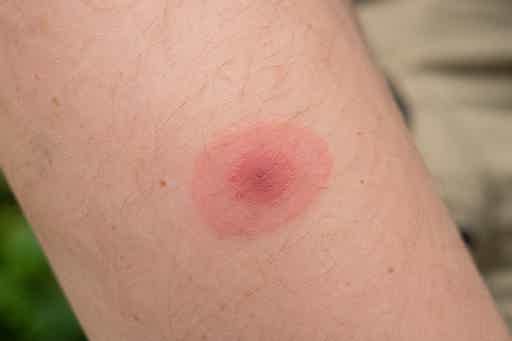
Although a bull’s eye rash can be indicative of Lyme disease, it is not always a reliable factor, as there have been confirmed cases of Lyme disease without a bull’s eye rash.
Later Stage Symptoms
When early Lyme disease goes undetected, the infection can spread and affect multiple body systems. Neurological symptoms are among the most debilitating features of disseminated Lyme.
Facial palsy, shooting nerve pain and meningitis most often appear in the early disseminated stage, within weeks of infection, while cognitive difficulties, memory problems, and difficulty with word retrieval are more typical of late neurologic Lyme.
What to Do Next If You Still Suspect Lyme Disease
Track and Document Your Symptoms: Before your next medical appointment, start building a detailed record of everything you're experiencing. Doctors make better decisions when they have a clear picture of symptom patterns over time, and a written log gives your clinical picture far more weight than a verbal summary in a 15-minute appointment. A simple daily log noting energy levels, joint or muscle pain, sleep quality, and any new symptoms can help you and your provider spot patterns over time.
Request a Clinical Evaluation: Lyme disease diagnosis should be based on symptoms, medical history, tick exposure, and geographic location, not blood tests alone. What you need is a thorough clinical evaluation by a provider who understands the limitations of current testing and is willing to weigh the full picture. Ask specifically whether a clinical diagnosis is appropriate given your exposure history and symptom profile.
Seek Other Medical Opinions: Seek out a provider with specific experience in tick-borne illness. This may include integrative medicine physicians, naturopathic doctors, or infectious disease specialists who take a broader diagnostic approach. Naturopathic Doctors experienced in complex, tick-borne cases can be a useful part of this picture too, working alongside your medical provider to run functional testing and help trace the factors that may be contributing to your symptoms. At Healthflow, this process is guided by Dr. Cook's PRO Method, an individualized framework for identifying and addressing the root causes behind lingering symptoms.

Not all physicians are equally equipped to manage Lyme disease, so you must seek further medical opinion to get to the root of your symptoms.
Get Answers Beyond a Single Lyme Test with Healthflow Naturopathic

Healthflow Naturopathic uses science-informed treatment methods to address the root cause of your symptoms.
Current Lyme testing has real limitations, especially early on. As such, a clear symptom record, a thorough clinical evaluation, and a provider who understands tick-borne illness matter far more than a single lab result. If you suspect Lyme, staying persistent and working closely with a medical provider on diagnosis and any antibiotic treatment is the most important step you can take.
That said, lingering, hard-to-explain symptoms often deserve a wider look, and that's where we can help. At Healthflow Naturopathic, we work alongside your medical care, using functional testing and individualized plans to identify the factors that may be contributing to your fatigue, inflammation, or ongoing discomfort. If you're ready for a more complete picture of your health, book a consultation with Healthflow Naturopathic.
Frequently Asked Questions (FAQs)
Can Lyme disease get better on its own?
In rare cases, very early Lyme disease may resolve without treatment, but this is the exception, not the rule. Without antibiotic treatment, Borrelia burgdorferi can disseminate throughout the body, affecting the nervous system, joints, and heart. The longer infection goes untreated, the more complex it tends to become, and a minority of patients continue to have symptoms even after a full course of antibiotics.
How common are false negative Lyme tests?
False negatives are particularly common in early Lyme disease. The CDC puts the sensitivity of two-tier testing at only 30% to 40% during early infection, and a 2026 study found it as low as 22% to 36% at first draw. This means the test fails to detect the majority of cases before a strong antibody response has developed.
Can nerve damage from Lyme disease be reversed?
Neurological symptoms caused by Lyme disease often improve significantly with appropriate antibiotic treatment, especially when caught before damage becomes severe. However, some patients with late neurological Lyme disease experience persistent symptoms even after treatment, a condition sometimes referred to as Post-Treatment Lyme Disease Syndrome (PTLDS). Early diagnosis and treatment give the best chance of full neurological recovery.
What are the symptoms of late-stage Lyme disease?
Late-stage Lyme disease can affect multiple body systems simultaneously. Common presentations include severe arthritis, neurological symptoms such as memory problems, brain fog, facial nerve palsy, and shooting nerve pain. Cardiac involvement such as heart block also occurs, though it typically appears earlier, during the disseminated stage.
What services does Healthflow Naturopathic offer?
At Healthflow Naturopathic, we offer naturopathic medicine, functional and diagnostic testing, clinical nutrition, supplement guidance, antimicrobial botanicals, and IV nutrient therapy, all built around individualized, root-cause care. Our Naturopathic Doctors serve patients across digestive health, women's health and hormones, autoimmune and chronic inflammation concerns, fatigue, and stress, both in person and virtually.
*Disclaimer: The information in this article is for educational purposes only and reflects general research and traditional use; it is not a guarantee of results and does not constitute a diagnosis, prescription, or personalized treatment plan. It is not a substitute for professional medical or naturopathic advice, diagnosis, or treatment. Always consult a qualified healthcare provider before starting, stopping, or combining any treatment, supplement, or remedy — especially if you have an existing health condition or take medication. Products referenced in this article, if any, may be available for purchase through Healthflow Naturopathic's dispensary; this does not mean they have been recommended for you, and they can be purchased elsewhere. For personalized naturopathic support, visit Healthflow Naturopathic.

Dr. Adrienne Waunch blends traditional naturopathic principles with evidence-based care to find root causes. Her individualized plans may include testing, botanicals/supplements, lifestyle changes, and therapies like IV or injections. Read full bio
Related Posts

6 Signs of Chronic Inflammation in Women That You Should Know
Chronic inflammation in women often hides as fatigue, bloating, hormonal shifts, and brain fog. Learn six warning signs and how to address the root causes.

Heavy Metal Testing in Calgary: Price & Best Options
Learn what heavy metal testing in Calgary costs, how blood and urine tests differ, and how Healthflow Naturopathic compares with public labs. Read on.

How to Get Rid of Bloating and Gas Naturally: Fast Relief Remedies & Treatment Options
Learn how to get rid of bloating and gas naturally with fast relief remedies, treatment options, and root-cause care from Healthflow Naturopathic.